The Future of the Chemical Industry: A Lawmaker’s Vision for Growth with Tax Incentives
On the morning of May 12, during the 9th session of the National Assembly, legislators convened in a plenary session to deliberate on the revised draft Law on Corporate Income Tax.
National Assembly Deputy Ta Dinh Thi, representing the constituents of Hanoi, voiced his overall endorsement of the government’s explanatory report and the substance of the proposed amendments. He concurred with his fellow deputies on the necessity of further scrutiny and refinement to comprehensively institutionalize the pivotal directives outlined in Politburo Resolutions 57 and 68.
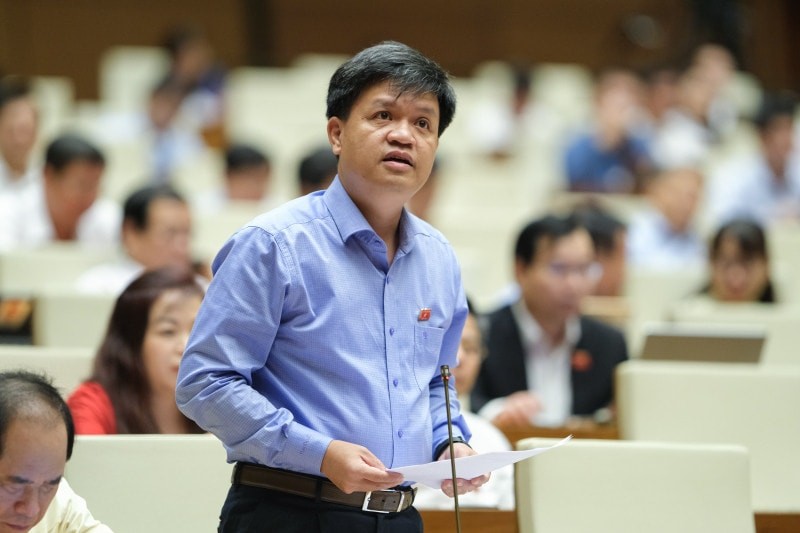 |
| National Assembly Deputy Ta Dinh Thi. (Photo: daibieunhandan.vn) |
Deputy Ta Dinh Thi proposed an amendment to include the chemical industry within the purview of sectors eligible for corporate income tax incentives, as outlined in Clause 2, Article 12 of the draft legislation. He substantiated this proposal with three primary justifications:
Firstly, according to the National Assembly Standing Committee’s explanatory report No. 1275, dated May 7, pertaining to the amended Law on Chemicals, there exists a consensus to incorporate relevant provisions into the draft Law on Corporate Income Tax. This indicates a deliberate effort to harmonize legal frameworks.
Secondly, the chemical industry is integral to Vietnam’s industrialization, modernization, and national security imperatives, as underscored in the country’s 2021–2030 socio-economic development strategy and Resolution 29, promulgated on November 17, 2022, by the 6th Plenum of the 13th Party Central Committee.
Resolution 29 designates the chemical sector as a foundational industry, warranting prioritized development. Nonetheless, the current draft law falls short of reflecting this strategic priority.
Thirdly, under the Investment Law—specifically Clause 3, Article 20—the levels and durations of special incentives are governed by the Corporate Income Tax Law and land-related legislation. However, the omission of the chemical industry from the list of sectors eligible for tax incentives in the draft law creates a policy discrepancy.
To rectify this inconsistency, Deputy Thi advocated for the inclusion of the chemical industry among the sectors qualifying for tax incentives. This amendment, he argued, would ensure policy alignment with Vietnam’s broader socio-economic aspirations.
“The Silken Thread of Heritage and Art”

THE HANOI CHRONICLE — Sac Lua (The Color of Silk), curated by artist and lecturer Nguyen The Son from Hanoi National University of Education, is an enchanting exhibition that forms part of the cultural initiative, “Stories of Communal Houses in the City.” This collaborative effort with Hoan Kiem District, Hanoi, showcases a unique blend of […]
Exploring a Rich Heritage: Unveiling the Hidden Gems of Ha Long and Bai Tu Long Bays

The newly unveiled superyacht experience offers an exclusive journey through the UNESCO-listed Ha Long Bay. This luxurious voyage takes travelers to the remote corners of the bay, where they can explore pristine natural landscapes that remain untouched by other cruises. It’s a unique opportunity to discover the raw beauty of Ha Long Bay’s UNESCO heritage site, an area that is usually inaccessible to tourists.
A Sparkling Spectacle: French-Vietnamese Fireworks Display Lights Up Đà Nẵng Fest

The night sky over the Hàn River was alight with a dazzling display of pyrotechnics as Team Đà Nẵng-Việt Nam and France’s Arteventia kicked off the Đà Nẵng International Fireworks Festival 2024 with a breathtaking performance on June 8.
Hội An: The Ultimate 2024 Travel Gem

The ancient city of Hoi An has been recognized for its exceptional value, ranking first in The Post Office UK’s 2024 list of Best-Value Destinations in the World.
“Prestigious Awards for 155 Organizations and 69 Tourism Leaders at VITM Hanoi 2025.”

THE HANOI TIMES — The Vietnam International Travel Mart (VITM) Hanoi 2025 commenced with the prestigious VITA Awards, honoring an impressive number of organizations and individuals for their exceptional contributions to the country’s tourism industry in 2024. A total of 155 organizations and 69 individuals were recognized, serving as a trusted benchmark of excellence for […]

Nhận xét
Đăng nhận xét