The Unsung Champions: A Quest to Save To Lich River
THE HANOI CHRONICLE — On a warm summer evening in late April 2025, a dedicated team from the Hanoi Drainage Company embarked on their routine mission.
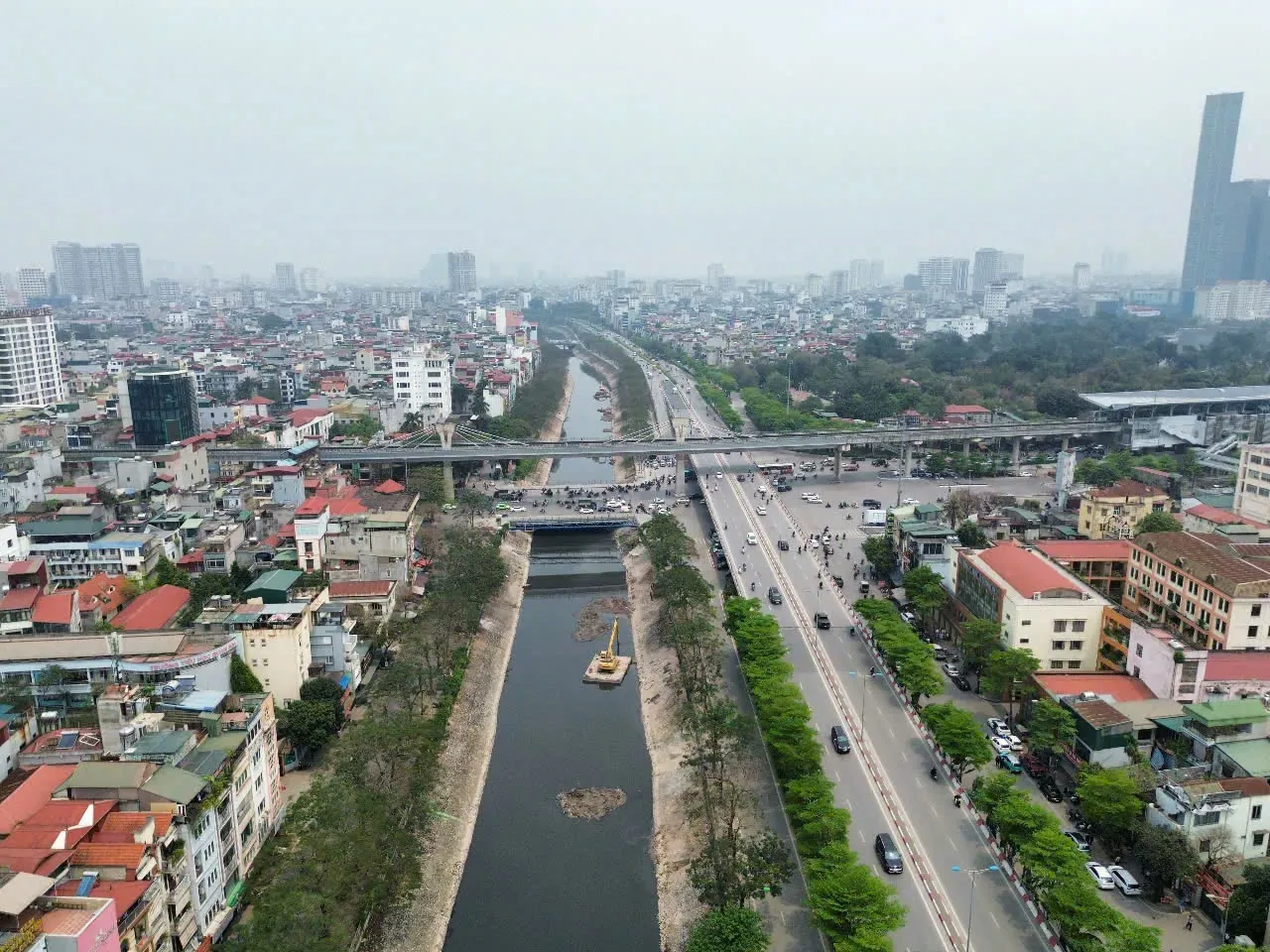
The Iconic To Lich River in Hanoi. Photo: Kinh te & Do thi Newspaper
With their equipment at the ready, the team seamlessly divided into groups under the soft reddish glow of streetlights. Each member had a specific role: one operated the suction machine on land, another skillfully maneuvered the excavator to dredge the riverbed, and the rest worked with suction hoses in the storage tanks on the river.
Their actions were synchronized with precision, as if directed by an invisible conductor. The faint light from the excavator danced on the river’s surface, and the roar of the machines filled the air. Amid this bustling scene, team leader Phan Ky San stood out, his deep, commanding voice giving orders.
San, a native of Haiphong, joined the Hanoi Drainage Company in 1992 after three years of freelance work. With 33 years dedicated to drainage under his belt, he shared his journey with The Hanoi Chronicle. “I started in the underground sewer division for nine years and then moved to the Mechanical Construction Enterprise, where I’ve been ever since.”
Over three decades, San has experienced a myriad of emotions and memories, from the dark underground sewers to braving freezing winters to remove waste and sludge—memories that are forever etched in his mind.
“This job presents endless challenges,” San reflected. “But the biggest hurdle we face is urbanization.”
As Hanoi rapidly transforms, lakes and ponds disappear, and sewage and garbage find their way into rivers, threatening to clog these vital waterways. For workers like San, the river cleanup is not just about tackling sewage; it’s about battling the overwhelming amount of garbage.
He recalled a particularly distressing memory from about ten years ago when they were cleaning a sewer in Van Phuc Ward, Ba Dinh District. “The sewer, which was originally a canal, was clogged with garbage—a solid mass that even supported the weight of a person. We spent over a month removing the trash and restoring the flow. It was a daunting task.”
Nghiem Van Huynh, leader of another team in the Mechanical Production Division, took a different path into the drainage industry. With a background in construction, he decided to become an excavator operator in 1987, a decision that changed his career trajectory. After graduating in 1991, he worked for a construction materials company, traveling across the country. However, the constant travel took a toll on his health.
In 1998, Huynh accepted a friend’s suggestion to join the Hanoi Drainage Company, and his innovative spirit shone through. He invented a unique float system for excavators, revolutionizing the dredging process. This system allowed excavators to operate and move effortlessly on water, improving efficiency and replacing manual labor.
Today, these specialized floats are indispensable in the company’s river and lake dredging projects, including the To Lich River cleanup.
“Technology and modern machinery are crucial in any field,” Huynh shared. “I’m glad my invention has made our work more efficient and contributed to restoring the To Lich River.”
In late April and early May 2025, Nguyen Khang Street, from the Tran Duy Hung intersection to the Cau Giay area, buzzed with unusual activity. Yellow special vehicles from the Hanoi Drainage Company lined the streets, and workers in bright yellow uniforms prepared machinery to dredge the iconic To Lich River.
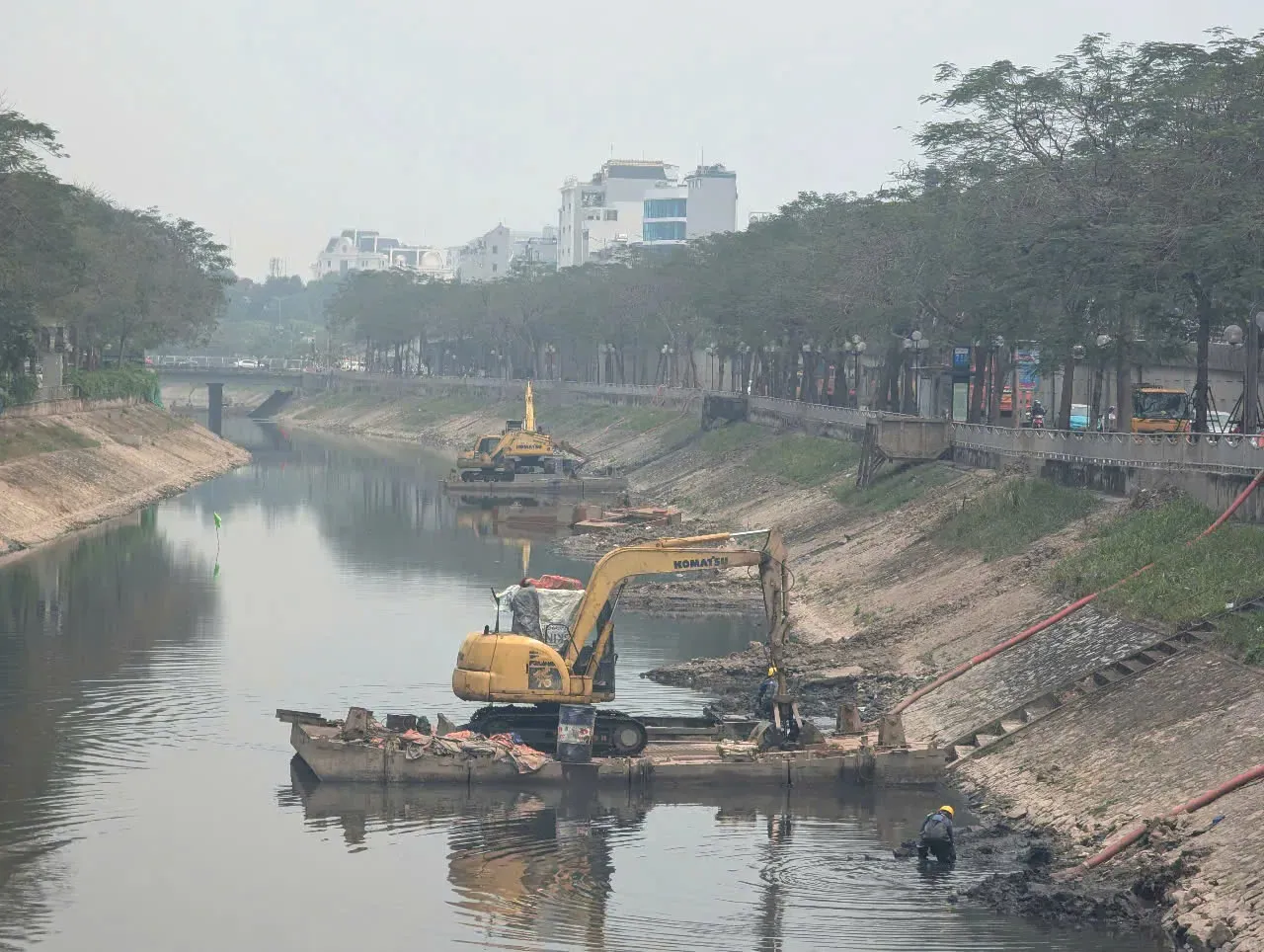
An Excavator in Action on the To Lich River.
This operation is a race against time, nature, and mounting challenges. The company has deployed all its resources, including excavators, barges, and modern vacuum trucks, to tackle the decades-old sludge buildup. By August 2025, the plan is to dredge about 40,000 cubic meters of sludge, a testament to the project’s scale and importance.
The removal of sludge is just the beginning. It must then be carefully transported and processed to avoid environmental harm. Safety regulations are strictly followed as workers and engineers navigate geographical and weather challenges. At the heart of this campaign is the Mechanical Construction Enterprise, with its dedicated workers.
San shared that during the To Lich River cleanup, the team often received tokens of appreciation from residents, including fruit, sticky rice, and bottles of water. “These gestures and words of encouragement motivate us,” San said. “We’re proud to be contributing to the revival of this historic river.”
A Collaborative Effort for a Cleaner Future
While San and Huynh are unsung heroes, they are not alone. Hanoi has taken steps to restore the To Lich River, but experts emphasize that stopping sewage flow into the river is crucial. The city plans to transfer clean water from West Lake and the Red River to the To Lich River, ensuring a stable water supply.
Another key initiative is the construction of a dam near Quang Bridge in Thanh Tri District to stabilize water levels during the dry season. This multi-purpose solution will not only help the river but also improve flood management in urban areas. However, for these efforts to succeed, wastewater treatment is essential to prevent the dam from becoming a trap for pollutants.
Ultimately, the community must play its part by stopping the dumping of waste into the river. As resident Le Minh Tuan of Dong Da District remarked, “The government can do a great job, but if people don’t change their habits, the river will remain polluted.”
Nguyen Van Thanh, a nearby resident, added, “Cleaning the river and adding fresh water is not enough. We need to stop littering and dumping, and authorities must impose stricter penalties.”
Nguyen Van Hien, a retired official from Thanh Xuan District, agreed, emphasizing the need for wastewater treatment and strict monitoring to ensure the success of bringing clean water from West Lake and the Red River.

Nhận xét
Đăng nhận xét